Efflorescence Removal in Scottsdale
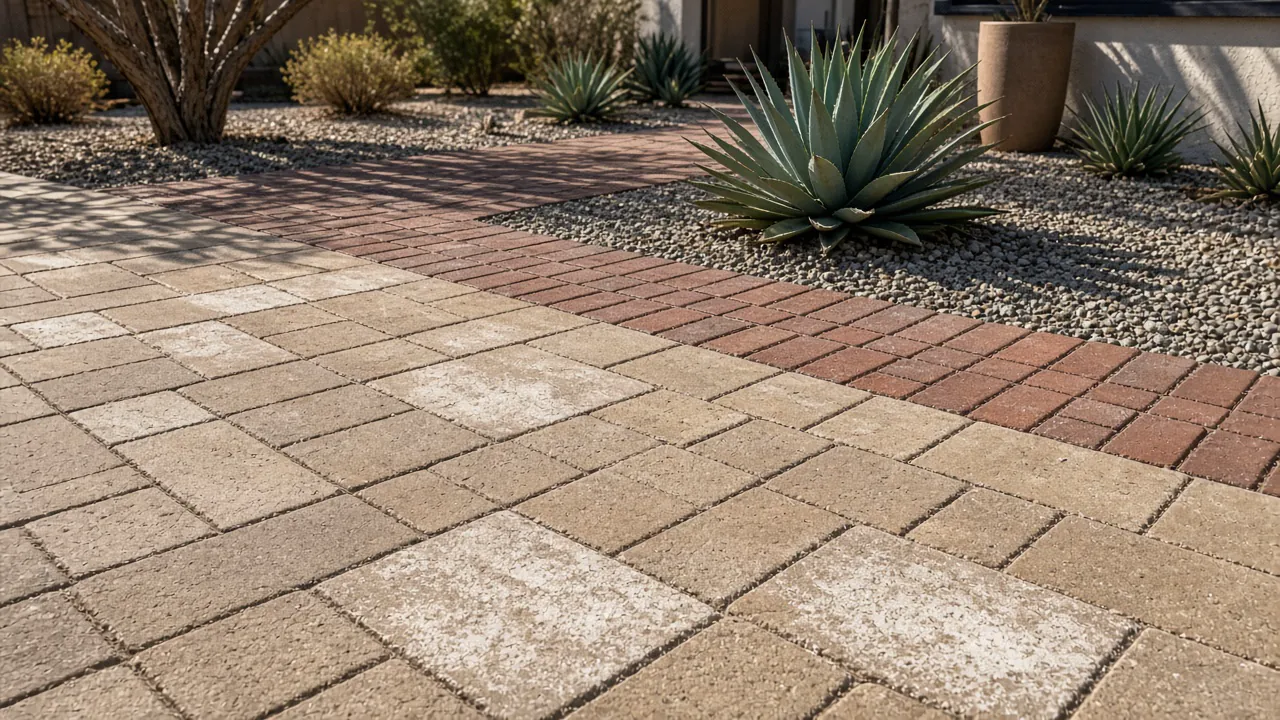
Quick answer: Efflorescence removal in Scottsdale on pavers and brick is a mineral-salt problem, not a dirt problem, so pressure alone usually smears it or brings it back. Brush the powder off dry, then use a paver-safe efflorescence cleaner and rinse. Seal only after the white is gone and the surface has dried.
This page is about concrete pavers and brick walkways. The chalky film on stucco is a wall issue and it is not what we are cleaning here. If the haze is on the patio, the front walk or a brick path, the steps below are the ones that hold up.
What the White Haze Actually Is
The Concrete Masonry & Hardscapes Association describes efflorescence as a whitish powder on concrete products. When cement hardens it forms calcium hydroxide. Water carries that salt to the surface. Carbon dioxide in the air turns it into calcium carbonate, which is the white you see. CMHA's paver maintenance note (PAV-TEC-005, revised 2022) says this does not change the structural strength of the pavers.
On a new install it can show up right away or within months. The same note says it may peak in as little as 60 days, hang on for months and wear off with traffic, and that a patio laid in a dry stretch may not bloom until the next wet cycle. Brick walks do a similar thing. Salts in the brick or the mortar move out with water and dry as a film. Mortar is softer than the brick face, so a harsh cleaner marks the joints first.
Scottsdale adds two local reasons the film keeps returning. Irrigation overspray pushes water through the joints every morning. Our hard water leaves its own mineral crust where spray dries on the surface. That crust can look like efflorescence even on older pavers that should have finished blooming. Both get called "that white stuff." The cleaning order is the same. The way you stop the comeback is not.
Why Pressure Alone Makes It Worse
A pressure washer moves loose powder. It does not dissolve a mineral film bonded to the face. CMHA's note on rinsing says a large volume of water matters more than high pressure, and that the cleaner is what removes the salt. Blasting a dry patio does three things we see on walks around town.
- It etches the face and can expose the aggregate so the paver looks sanded, especially on a light color.
- It blows joint sand out. The walk gets loose, weeds move in and the next rain carries more water under the pavers.
- It soaks the units. That water dissolves more salt inside the paver and the next hot afternoon pulls a fresh white film up. The haze "comes back" a week later and it looks like the wash failed. It did what water does.
Pros use a washer to rinse a cleaner, with the sprinklers off and the plants protected, not as the only step. The broader patio sequence is in paver and travertine cleaning and sealing. Pool decks are on patio and pool deck cleaning.
Dry Brush First
If the film is powdery, knock it off while it is dry. A stiff plastic or brass brush is the right tool. CMHA warns that steel bristles shed, rust and stain the pavers, so leave the wire brush in the garage. Brush, don't hose yet. Water smears the powder into the joints and, on a new paver, can draw more salt out.
Let the walk dry and look again the next day. Some light bloom is gone after a dry brush and a later rinse with plain water. A crust that does not brush off, or a film that returns as soon as the sprinklers run, needs a cleaner. Test a small hidden spot before you treat the whole path. Judge it after the spot has dried, not while it is wet. CMHA says to give the test at least 24 hours of drying before you decide the color is acceptable.
Efflorescence Cleaners, Step by Step
- Turn the irrigation off and cover or pre-wet nearby plants. Acidic rinse water burns grass and shrubs. CMHA says to saturate vegetation with water first so it absorbs less of the runoff, and to keep cleaner from ponding in low spots.
- Replace cracked units and sweep loose sand that would just soak up the chemical. Don't start on a walk that is still full of dirt. The cleaner should hit the salt, not a layer of dust.
- Choose a proprietary efflorescence remover made for concrete pavers or for brick, and follow that label for dilution and dwell time. CMHA says the best results come from these products because the acid is buffered and blended to clean without chewing the face. Strong acids change paver color. How much they change it depends on the acid, how strong it is and how long it sits.
- Pre-wet the pavers so the cleaner stays on the surface instead of sucking into dry spots. The surface should be damp, not puddled.
- Apply in sections, working up the slope so used cleaner drains back over area you have already done. Scrub with plastic or brass bristles. Don't let the product dry on the face.
- Rinse with plenty of water. CMHA notes that cleaners are often sprayed on at low pressure, about 30 to 100 psi, and that the final rinse should be water only. A garden hose is enough on a small walk if you use a lot of water. A washer is a rinse tool here, not a way to skip the cleaner.
- Let it dry and look. One pass is often enough. A second pass on a heavy bloom is sometimes needed. Ask the cleaner maker before you do that, because another round can discolor the pavers or expose aggregate.
Brick walks follow the same order. Keep the dwell time short on the mortar. If the joints fizz hard and the color shifts in the test spot, stop and switch to a milder mix or a product the brick maker names.
Is Muriatic Acid Safe on Pavers?
Muriatic acid is hydrochloric acid sold for masonry. It will dissolve efflorescence. It will also etch and discolor concrete pavers and mortar, and the fumes burn skin, eyes and lungs. If a label has you dilute it, follow that label and add acid into water, never water into acid. Pre-wet the surface, keep it off your skin and rinse until the runoff is clear. Don't leave it sitting in the joints.
We still don't reach for it on decorative Scottsdale pavers. CMHA's reason is the buffered proprietary cleaner: effective on the salt with less damage to the face. Techo-Bloc, a paver manufacturer, tells owners to avoid muriatic acid on its products and points them to an efflorescence cleaner instead. Your own paver maker's sheet is the one to read before you buy a jug. A walk that was colored or sealed at the plant can lose that color permanently if the acid is too hot.
Sealing After the White Is Gone
Seal a clean, dry surface. CMHA is direct that stain removal, efflorescence removal and a general clean come before a sealer or a liquid joint stabilizer. Sealing over the white locks the haze under a film you can see forever. Give the patio a full dry day after the rinse, longer if the joints are still dark, and confirm the powder is not creeping back before you open the sealer.
A sealer does not stop irrigation from pushing new salt out. Aim sprinklers off the walk or the film can return at the joints even under a coating. Joint sand that the rinse removed has to go back before you seal, or you seal an empty joint. The product has to say it is for concrete pavers. A glossy "wet look" sealer darkens the color, which is fine if you tested a board and you like it, and a surprise if you didn't.
What to Use, and What to Skip
| Method | Good for | Risk | Then what |
|---|---|---|---|
| Dry brush, plastic or brass | Light powder on pavers or brick | Low if you stay off steel bristles | Rinse later and see if it returns |
| Buffered efflorescence cleaner | Crust that brushing won't lift | Color shift if you skip the test spot | Rinse, dry 24 hours, then decide on a second pass |
| Muriatic acid | Rare, and only if the paver maker allows it | Etch, color loss, burns to skin and lungs | Dilute per the label, pre-wet, rinse hard or don't use it |
| Pressure only | Loose dirt after the salt is gone | Etch, lost joint sand, a new bloom | Use it to rinse cleaner, not as the treatment |
| Sealer | A surface that is already clean and dry | Locks white in if you seal too soon | Fix the sprinklers or the salts keep moving |
Walkway Checklist
- Confirm it is pavers or brick, not stucco
- Irrigation is off and plants are wet or covered
- Powder brushed off dry with plastic or brass, not steel
- A hidden test spot has dried for a day and the color is acceptable
- Cleaner is one the paver or brick maker allows, mixed the way the label says
- Surface was pre-wet, product did not dry on the face and the rinse was thorough
- Joint sand replaced if the rinse emptied the joints
- White is gone on a dry day before any sealer goes down
- Sprinkler heads no longer soak the walk every morning
If the walk is large, the joints are already failing or you don't want acid on the property at all, that is a normal job for us. The service people book for this kind of cleanup is pressure washing in Scottsdale. Call (480) 933-2314 and tell us whether the film is powder, a crust or something the sprinklers repaint every week.
Frequently Asked Questions
Will a pressure washer remove efflorescence?
Not by itself. Pressure moves loose powder and can etch the face and empty the joints. The salt needs a cleaner, then a heavy rinse. High pressure is not the step that dissolves it.
Why did the white come back after I washed it?
Water you drove into the pavers carried more salt to the surface, or the sprinklers are still soaking the joints. New pavers can also bloom again until the free salts are spent.
Can I use muriatic acid on colored pavers?
Only if the paver maker says so. Muriatic acid is hydrochloric acid and it can etch and discolor pavers and mortar. A buffered efflorescence cleaner is the safer default. Test first.
Should I seal pavers that still look white?
No. Seal after the haze is gone and the surface is dry. Sealing over efflorescence traps it. Keep irrigation off the walk or new salts can still come through the joints.
Is this the same as the white stains on stucco?
It is the same kind of salt, on a different surface. This guide is for pavers and brick walks. Stucco efflorescence is a wall repair, not a patio wash.