Rust Stain Removal on Concrete in Scottsdale
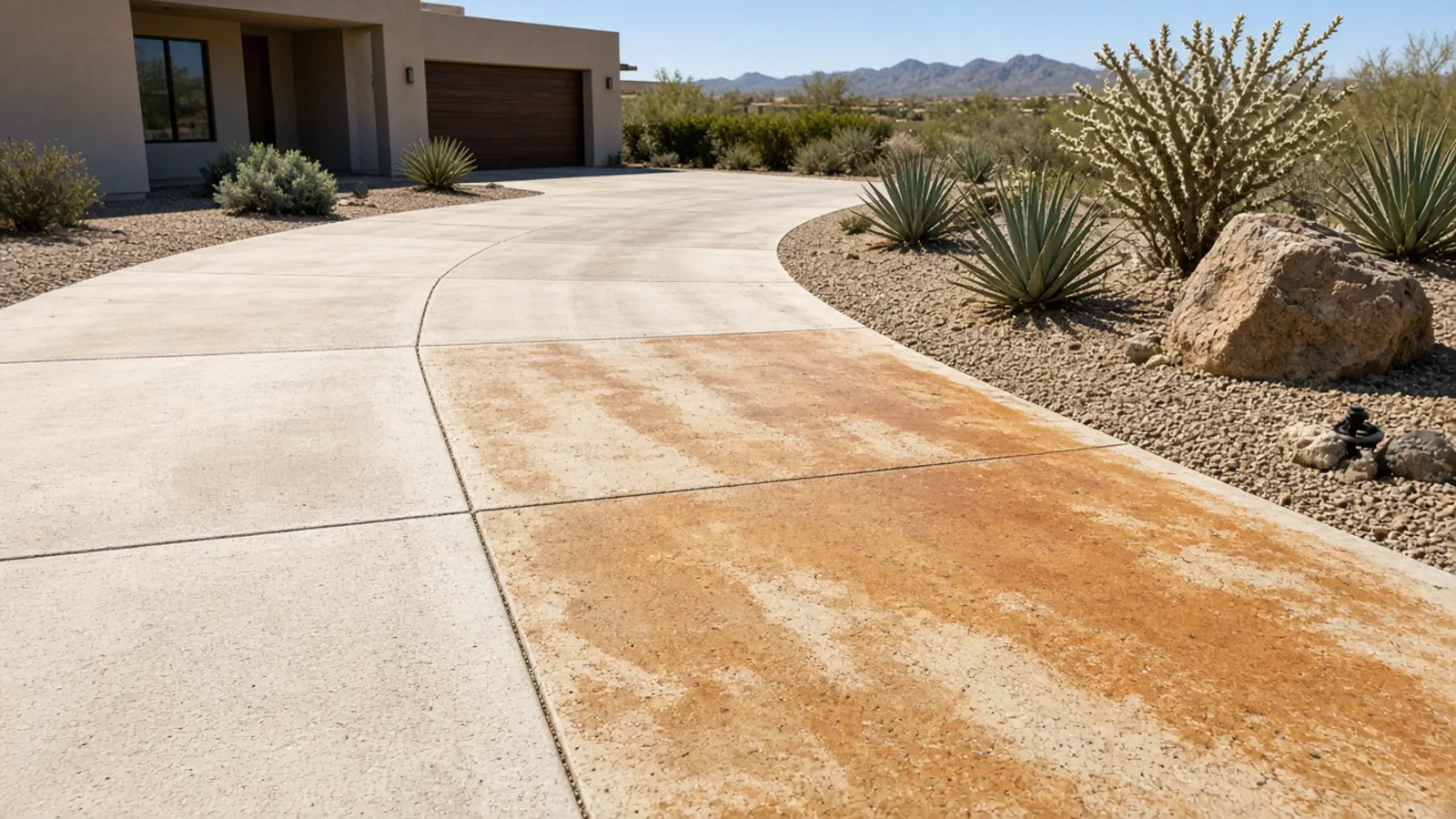
Quick answer: Rust stain removal concrete Scottsdale jobs fail when you only add pressure, because irrigation iron and fertilizer iron sit in the pores and the orange stays. Fix the sprinkler or the fertilizer habit or the fan pattern comes back.
Driveways, paver walks and pool decks in Scottsdale pick this up all the time. The water evaporates in the heat and the iron stays behind as a rust-colored stain. This guide shows how to tell that stain from ordinary dirt, what a homeowner can try safely and when the surface needs a different touch than a poured driveway.
Where the Orange Comes From
Three sources cover almost every rust-colored mark we see on hardscape here.
Irrigation and well water. Groundwater and some irrigation supplies carry dissolved iron. A head that throws onto the driveway wets the slab, the desert air dries it fast and the iron oxidizes in the concrete. The stain is often a fan or a comet shape that points back at the head. The same thing happens on block walls and the base of stucco when the spray hits them every cycle.
Fertilizer. Many lawn and shrub fertilizers include iron. Granules that land on concrete and then get watered in leave speckles and small blotches, often along the edge where the turf or the granite meets the slab. Sweep them off before the water runs. Once they're watered in, you're looking at a stain, not dirt you can broom away.
Metal on the slab. Furniture feet, planter stands, a steel edging and a leaking battery leave a tighter mark, often a ring or a drip line. A stain that grows out of a crack, with the concrete breaking up around it, can be steel inside the slab. Washing the surface doesn't fix the steel. That one needs a look at the concrete itself, not another pass with a nozzle.
Ordinary dust, mud and haboob film sit on top. They lighten when you wet them and they move with a wash. Iron stains stay orange when the slab is wet. That's the quick field test before you buy anything.
Why a Pressure Washer Leaves the Stain
A driveway wash is the right tool for dirt, mud and a lot of surface film. It is the wrong tool for iron that has already bonded in the pores. Higher pressure can etch the cream of the concrete, blow the sand out of paver joints and still leave the orange. If you've already washed the driveway and the fan is still there, more psi won't finish the job.
Other driveway stains follow different rules. Oil, leaf tannin and general soil are covered in our note on concrete driveway stain removal. This page stays on rust and fertilizer iron. If the whole property needs a wash once the stains are identified, start with the best pressure washing in Scottsdale and match the method to the surface.
How to Remove Rust Stains, Step by Step
- Find the source before you clean. Run each irrigation zone and watch where water lands. Mark every head that hits concrete, pavers, block or stucco. Look for fertilizer speckles along the edge and for metal objects sitting on the stain.
- Stop the water from hitting the hardscape. Adjust the arc, add a deflector or move the head so the spray stays on the plants. A clean slab with the same overspray will stain again. Do this even if you hire the cleaning out.
- Sweep fertilizer and metal debris off the dry slab. Don't rinse granules into the pores. Pick up or pad the furniture feet that are sitting in a ring of rust.
- Wet nearby plants first. Any masonry cleaner can burn foliage if it drifts. Rinse plants before and after, and keep the product off the granite and the turf as much as you can.
- Choose a product whose label says concrete or masonry. Read the dwell time and whether it says to neutralize. Don't mix it with bleach or another cleaner. Don't invent a stronger mix than the label allows.
- Test a hidden spot. A corner by the garage or a paver at the edge tells you whether the color of the slab changes. If the test spot etches, lightens oddly or doesn't touch the orange, stop.
- Apply, wait the labeled time and rinse. Keep the surface from drying out during the dwell if the label says to. Rinse thoroughly. Old, deep iron often lightens a lot and doesn't vanish in one pass. That's a normal result, not a failed wash.
- Treat pavers more gently than poured concrete. The face is thinner and the joints are sand. High pressure and a long dwell can scar the paver and empty the joint. Our paver and travertine cleaning note covers joint sand and sealing. Rust on pavers still needs the right cleaner. It doesn't need a blast.
- Recheck the sprinklers after the slab dries. Look in afternoon light. A faint fan means a head is still reaching the concrete. Fix that before you call the job done.
Rust Stain Checklist
- The mark stays orange when the concrete is wet
- You can point the fan or the speckles back at a head, a fertilizer edge or a metal foot
- Irrigation no longer throws onto the slab, the pavers or the wall
- Fertilizer granules are swept up before watering
- Plants are wet and rinsed and the product never sat on them
- The cleaner label says it is for concrete or masonry
- A hidden test spot looked acceptable before you did the whole area
- You followed the dwell time and rinsed or neutralized as the label says
- Paver joints still have sand, or you've planned to sweep sand back in
- You looked again after the next few irrigation cycles
Stain Types Compared
| What you see | Likely source | What actually helps | What doesn't |
|---|---|---|---|
| Fan or comet of orange from a head | Iron in irrigation or well water | A masonry rust remover plus aiming the head off the slab | More pressure alone |
| Speckles along the turf or rock edge | Iron fertilizer watered into the concrete | Sweep dry granules first, then a rust remover on what's left | Rinsing granules in and hoping |
| Ring or drip under furniture or a planter | Metal sitting on the slab | Remove or pad the metal, then treat the mark | Leaving the foot in place |
| Orange at a crack with breaking concrete | Possible steel inside the slab | Have the concrete checked | Grinding or blasting the surface and ignoring the crack |
| Orange on pavers, same fan shape | Same iron, thinner surface | Gentler cleaner and a check of the joint sand | High pressure that scars the face and empties the joints |
Pavers, Block and the Edge of the House
Poured concrete can take a careful cleaning that block, stucco and travertine cannot. Block walls next to turf get the heaviest irrigation staining because the heads sit right there. Use less pressure and a shorter dwell, and don't let the cleaner dry on the wall. Stucco is a finish, not a slab. If the orange is on the house wall, treat it as a wash of the wall, not as a driveway job.
White haze on pavers is a different stain. That's often salts coming out of the paver, not iron. Iron is orange to brown. If you have both, do the rust first and don't assume one product clears both.
Sealing can help after the stain is gone, because a tighter surface gives the next splash less pore to soak into. Sealers fail in the sun and under tires, and a sealer applied over rust locks the orange in. Clean first. If you seal, use a product meant for that surface and accept that it is maintenance, not a permanent shield.
When to Hand It Off
Hire the job out when the fan covers most of the driveway, when the surface is pavers or travertine or when a test spot didn't move the color. Tell whoever you hire that the stain is iron, not dirt, and ask how they'll protect plants and joints. A company that only quotes a flat driveway wash may be planning to rinse what chemistry has to lift.
Want a second look at the orange on your slab? Call (480) 933-2314 and tell us whether it lines up with a sprinkler, fertilizer or a piece of metal.
Frequently Asked Questions
Will pressure washing remove rust stains from concrete?
Usually no. Irrigation rust is iron in the pores. Pressure can wash off the dirt around it and leave the orange. A masonry rust remover, used the way the label says, is what lifts it.
What causes orange stains on Scottsdale driveways?
The usual source is sprinkler water that carries iron, including well water. Iron fertilizer and metal furniture feet cause stains too. A fan, speckles or a ring tells you which one.
Can I use a store-bought rust remover?
Only if the label says concrete or masonry, and only after a hidden test spot. Keep it off plants, follow the dwell time and neutralize if the label says to. Don't mix it with other cleaners.
Will the rust stain come back?
Yes, if the sprinkler still hits the slab. Aim heads at the plants and sweep fertilizer off the concrete before you water. A clean driveway with the same overspray stains again.
Are pavers different from a poured driveway?
Yes. High pressure can blow joint sand out and etch the face. Rust still needs the right cleaner, used more gently, and the joints may need sand afterward.