Cleaning Artificial Turf in Cave Creek and Carefree
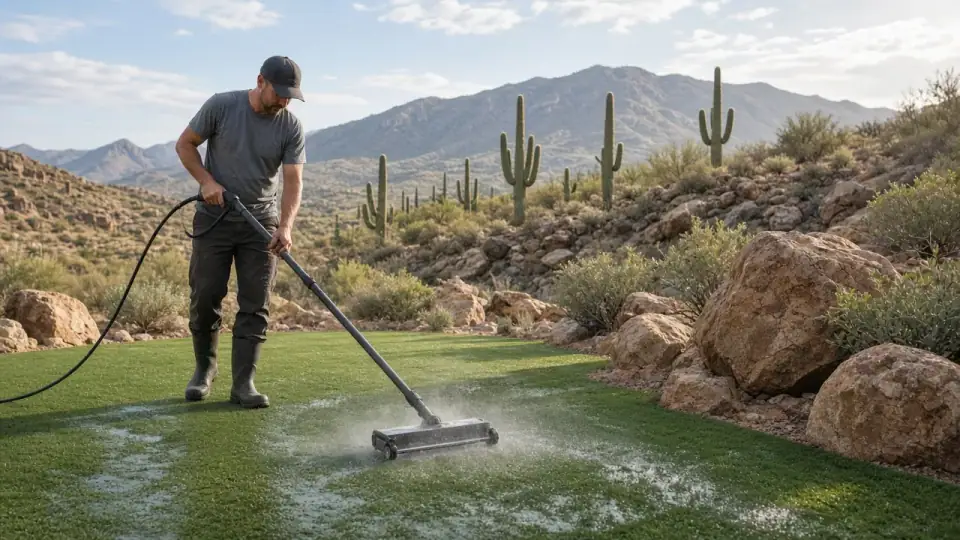
Artificial turf in Cave Creek and Carefree doesn't stay clean on its own. Desert dust, decomposed granite and monsoon silt work down between the blades. Dogs make it worse in a side yard. A rinse helps. A pressure washer used the way you'd strip a driveway does not.
What you're actually washing off
Lots up here sit in gravel, decomposed granite and open desert. Wind drops fine dust on the turf all summer. After a monsoon storm, silty water sheets off the slope and settles in the low part of the lawn. Pet areas add urine and whatever the dog tracked in from the wash.
That mix packs into the infill. The lawn can look flat and gray even when the blades are fine. If you only wet the top, the dust stays underneath and the smell comes back when the turf heats up the next afternoon.
Pressure is the part people get wrong
Turf blades are plastic. A tight jet that's right for concrete will fuzz the blades, fold them over and blow the infill out of the backing. Once the infill is gone the turf wears faster and drains worse.
Use a wide fan or a surface cleaner that glides and keep the head moving. You want to lift dust and rinse it out the edge. You don't want to dig a stripe. If infill starts bouncing out of the turf and onto the gravel, you're too close or too strong. Back off.
Skip a zero-degree tip. Don't park the wand in one spot.
A simple way to wash the lawn
- Walk it first. Pick up toys, rocks and bark. Note the seams and the low spot where water already sits.
- Rinse loose dust with a garden hose so the washer isn't grinding dry grit into the blades.
- Go over the lawn with a wide fan or a surface cleaner in overlapping passes. Work toward the edge that drains, not toward the house or a pool.
- On a pet area, rinse longer and let the water move through the backing. Urine sits in the infill. Blasting one spot only moves it sideways.
- After it drains, brush the pile in one direction with a stiff broom so the blades stand up.
- Check the edges. Granite fines pile up where turf meets a border. Rinse those out or the next wind puts them right back.
Morning is the comfortable window. By afternoon, turf in full sun is hot and a cleaner can dry before it rinses through.
What not to pour on it
Household bleach, a solvent and a random deck wash can fade the blades or leave a film that holds more dust. If the turf maker named a cleaner, use that. If they didn't, plain water does most of the work. For pet odor, ask about a cleaner made for artificial turf. Don't guess with pool chlorine.
Hard water in the north valley can leave spots if rinse water sits and bakes. A last light rinse and a brush beat soaking the lawn and walking away.
After monsoon silt
If a wash or a downspout dumped muddy water across the turf, don't wait for it to bake on. Rinse while the silt is still soft. Baked silt takes more pressure and that's when blades get damaged. Pull the silt off the border rock too or the next rain carries it back.
Homes in Carefree and Cave Creek often have turf tucked against boulder and granite beds. That's the edge to watch. The open lawn in the middle is usually the easy part.
If you'd rather have us do the rinse, request a free quote and tell us how big the turf area is and whether dogs use it. We'll match the pressure to the blades instead of treating it like concrete. The citywide service page is artificial turf cleaning in Scottsdale. This post stays on Cave Creek and Carefree.